
The Odyssey 2026 Movie Review: Bad Accents, Zeus’s Law, & Epic Storytelling

Updated: Aug 13
Christopher Nolan’s Odyssey movie is overall a cinematic success, and that is obviously reflected in the box office numbers. However, it’s far from perfect. The movie can be described as coherent and epic storytelling, with the final act being especially thrilling. Nevertheless, it suffers from miscasting and horrid-sounding modern American accents that take you completely out of the film.
Looking at what the movie does well, in particular, it takes the concept of what Christopher Nolan (or at least his characters in the movie) describes as Zeus’s Law and makes it the heart of the film’s world-building and plot. Zeus’s Law is what the Ancient Greeks would refer to as the moral rule of xenia — which states that all visitors or strangers to your home should be treated kindly, as they could be Zeus in disguise. In the original, Homer emphasizes the concept of xenia, especially in Book 9 with the Cyclops, which is also featured heavily in Nolan’s movie. The Cyclops episode in Homer occurs in the same chapter where Odysseus and his men needlessly raid the Cicones, killing the men and capturing the women.
We could say that their traumatic encounter with the Cyclops, Polyphemus, was their just reward for that crime. In turn, we can say that Polyphemus eating his guest was equally criminal, and his losing his eye was also a fair punishment. Now there are nuances to this. Did Odysseus have any right to enter Polyphemus’s home uninvited? Would it not have been better if Polyphemus simply accepted a gift as compensation for a guest invading his home and eating his cheese instead of his extreme and barbaric plan to kill and eat every single member of Odysseus’s crew?
In any event, Homer's Chapter 9 explores xenia and its web of moral obligations and consequences. You could say that the suitors in Ithaca overstaying their welcome is also a clear example of xenia being violated. But Homer makes it clear that the suitors are all rogues who have abused the sacred law of hospitality and that Odysseus is clearly morally justified in killing them. Christopher Nolan takes a similar but different approach and makes the concept the core of every major event in the movie, including the back story of the sack of Troy.
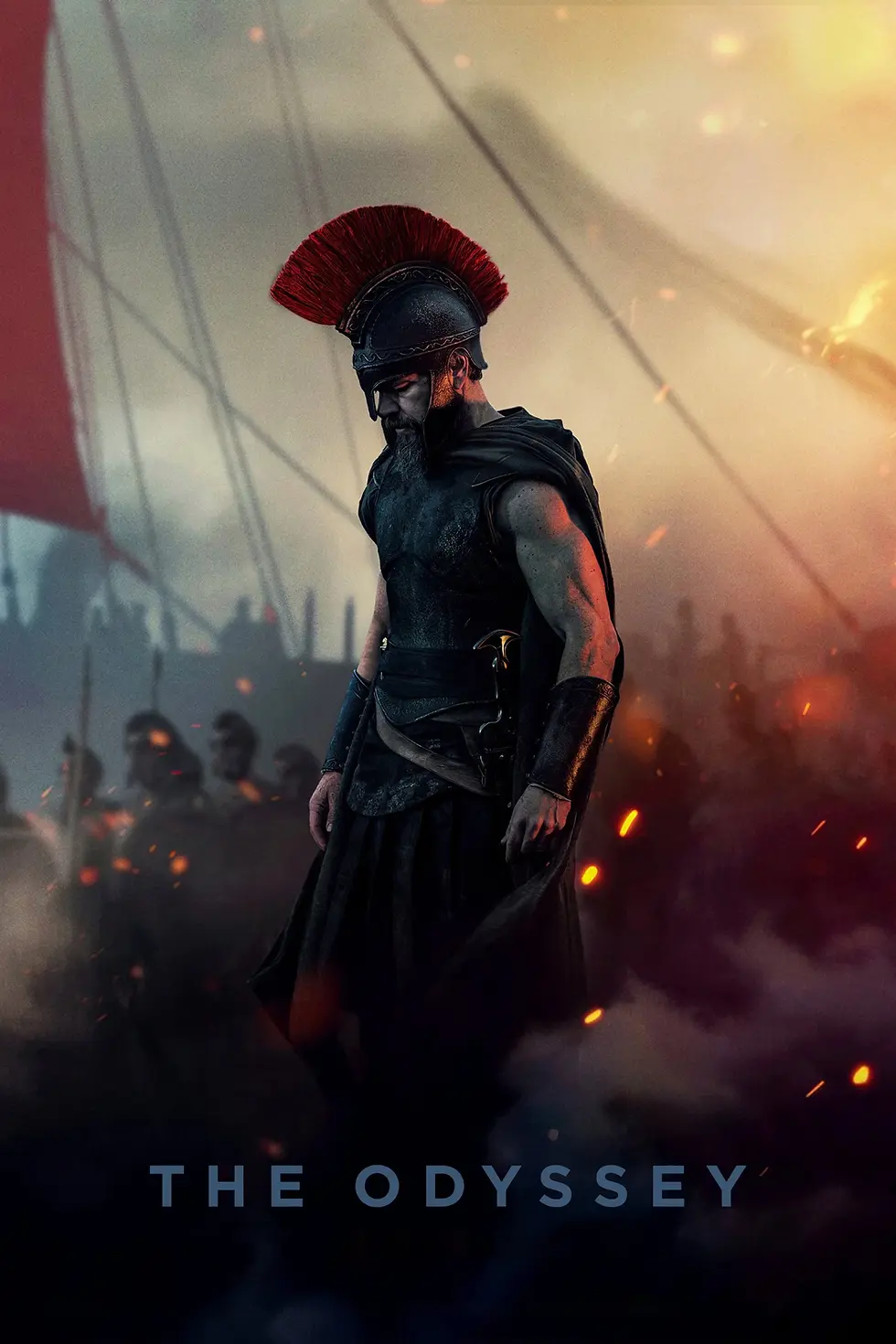
Zeus’s Law in Christopher Nolan’s Odyssey
As mentioned earlier, xenia or Zeus’s Law is the idea that every guest or stranger should be honored, and Christopher Nolan expands it to achieve consistent world-building and to highlight a well-defined moral in his version of the Odyssey, although he is a little too obvious with it at times. The concept of xenia is perfectly illustrated in the tale of Baucis and Philemon.
They were an elderly couple who lived in town in a region called Tayana. This town was visited by two of the gods — Zeus himself and Hermes — both of them disguised as beggars. The inhabitants of the town refused them hospitality after they went door to door begging for a place to spend the night, that is, until they arrived at the door of the poor couple, Baucis and Philemon.
Zeus and Hermes deemed the town too uncivilized and unfit to preserve and decided to destroy it and all its inhabitants via flood, with only Baucis and Philemon being saved. Their humble home was then transformed to a temple. In short, the myth portrays hospitality as godliness. This means that in the ancient Greek world, the host had to welcome guests with food, drink, and shelter before even asking for their names, and that applied to all strangers: from beggar to king.
However, it wasn’t a one-sided relationship. Guests had an obligation to be respectful and not overstay their welcome or abuse the proffered hospitality, as well as return the favor if the need ever arose in the future. While Homer emphasizes the concept in the Cyclops episode, Nolan makes it the basis of the whole film. Everything is tied back to that sacred law, including the Trojan Horse trick that led to the capture of Troy. Odysseus in both Homer’s epic and Nolan’s film is the architect of the Trojan Horse, which was a hollow statue of a horse left as a gift on the beach for the Trojans.
In reality, it was no gift. The Greeks had feigned retreat and left a handful of Greek champions hidden in the horse. After the horse was dragged inside of Troy, the Greek heroes came out of the horse, sacked the city, and opened the gates to the hidden Greek army, leading to the utter destruction of Troy. Nolan portrays Odysseus as a character suffering the psychological consequences of this crime against xenia. In Greek legend, Odysseus is mentioned as the one responsible for hurling the young son of Hector (the foremost champion of Troy killed by Achilles) — Astyanax — off the Trojan ramparts.
Christopher Nolan is business-minded enough not to show Odysseus personally committing these war crimes, because no modern audience would root for such a hero. However, we do see his men committing similar atrocities in flashbacks during the sack of Troy. In particular, we see a young Trojan girl fall victim to a Greek sword, who is then later linked to Athena — Odysseus’ patron goddess.
More importantly, Nolan creates a moral world where Odysseus, and by extension, the civilization he belongs to, is more or less condemned by their violations of Zeus’s Law. It exists on two levels: Odysseus, the man and king, cannot ever reign peacefully again as the king of Ithaca. In Homer, Odysseus gets back home, kills the suitors, reunites with his wife, and reigns again as king of Ithaca. In th the movie (spoilers ahead), Odysseus gets back home, kills the suitors, reunites with his wife, and runs away with her to escape the consequences of breaking the holy rules of hospitality.
This idea of a man losing the peace of his home and hearth as a consequence of violating xenia does not end with Odysseus in the movie. It extends to the whole of the Mycenaean civilization that Odysseus belongs to. Characters in the movie make constant reference to the Sea People, including Odysseus, which is ironic. The Sea People in history and the movie are a group of pirate warriors who raided eastern Anatolia, Syria, Palestine, Cyprus, and Egypt toward the latter end of the Bronze Age around the 13th century BCE and were directly responsible for collapsing several great civilizations such as the Hittites.
The irony lies in the fact that some historians have identified the Sea People as a group of Bronze Age Greeks or Achaeans, the name that Homer applies to Greek warriors in the Iliad and the Odyssey. In short, Odysseus, when he speaks of the Sea Peoples, may well be referring to the pillaging carried out by him and his men and other Greek warring parties returning home from Troy. Nolan does an excellent job of portraying the entirety of Odysseus’s world as living under the constant or even imminent threat of collapse as a result of the original sin of the Trojan War, the frame story of the Odyssey and its symbol of violating xenia.
He links it intricately on every level throughout the film. For example, at the beginning of the movie, Penelope (played by Anne Hathaway) tries to convince Odysseus in a flashback to escape going to war by running away with her. It seems at the time silly to both us and Odysseus; however, by the movie’s end we see this reference paying off and maturing into an excellent development that ties back to xenia. More on this later.
Modern accents and miscasting in the Odyssey
The modern American accents in the film are absolutely jarring and can take you completely out of the movie. Maybe not every epic film has to be spoken with these pretentious British accents, but I think even a modern audience would appreciate dialogue spoken in diction and word choices that we expect noble warriors of the ancient past to speak in. Instead, we get something like:
Yo, Odysseus, bro. It’s your damn fault we ended up in this Cyclops’ cave. We’re tired of your ‘Just trust me, bro’ bullshit, man.
Well, it’s not as bad as all that. But it’s not so much better either. Apart from the bad accents, we also have the miscasting. The miscasting exists on two levels. There is the decision to cast Helen of Troy (played by Lupita Nyong'o) as a Black woman, which may have been a deliberate choice to rub it in the face of a certain group of people on social media complaining about wokeness in film. Helen in the movie has about three minutes of screen time, so this is not much of an issue.
However, considering the fact that Helen of Troy is an icon of ancient Greek culture and modern Western literature, the choice was a little odd and jarring. There are hundreds of icons — paintings, carvings, and statues — of Helen of Troy (also known as Helen of Sparta), and none of them look like a Black woman. She is way too familiar in Western culture, iconography, and literature to be portrayed as Black without that having a discordant effect. It’s like having a depiction of the Mona Lisa as a Chinese woman. And the thing about it is that the ancient Greeks were aware of Africans to the point that they have a lost epic called the Aethiopis featuring an Ethiopian (i.e., a Sudanese or Nubian prince), Memnon, fighting on the side of Troy. So the argument that Helen’s beauty among the Greeks may have been based on her being an exotic African queen is rather far-fetched.
However, Helen gets only three minutes in the film, as mentioned earlier. What is even more worrying is the miscasting in the film. It seems the casting in the film was a combination of actors who are currently the in thing in Hollywood and actors who are Christopher Nolan’s good friends. Lupita Nyong'o has been rather popular since her feature in Black Panther (2018). This is even more so of Zendaya, who recently appears to be in everything. The case with Zendaya is worse because she plays the role of Odysseus' patron goddess, Athena. In Homer’s original epic, the relationship between Athena and Odysseus is complicated and interesting.
The two of them banter and even flirt slightly like a man and woman who are old platonic friends with a hint of romantic attraction as an undercurrent in their relationship. So, translated into a movie, you would expect the two to look the same age and be peers when interacting with Athena in human form. Instead, we get the much younger Zendaya paired with an older Matt Damon as Odysseus. She lacks the gravitas of Athena in Homer’s epic. More than that, Nolan portrays Athena not as a true goddess, but as the psychological consequences of Odysseus’s war crimes. Athena is younger than in Homer because she is the ghost of a Trojan child killed during the Trojan War, haunting Odysseus’s conscience and memory.
The main character, Odysseus, played by Matt Damon, is good and even compelling as a conflicted character, whom you nevertheless root for. Anne Hathaway as his wife Penelope also works. She plays the stereotypical dutiful and loyal housewife besieged by suitors, which further emphasizes the mismatch of the role of Athena. The goddess is the only female showing initiative in Homer’s original. She is the one who argues for Odysseus' safe passage back to Ithaca with Zeus. She is the one who politically outmaneuvers Poseidon, who was opposed to Odysseus' return. She is the one who informs Telemachus of a practical diplomatic and war strategy to defeat the suitors and save himself.
By portraying Athena as the figment of a man’s guilty conscience, the movie ends up being short of interesting female characters with agency. I mean, unless we count, to some extent, Circe (played by Samantha Morton), who Nolan casts not as the stereotypical sexy and magical seductress or femme fatale (as in Homer), but as a kind of medieval European witch/crone motivated by some ill-articulated past wrong committed against her by men. Her scene of turning Odysseus’s men into pigs, along with the Cyclops sequence, are among the most horror-coded and amazing episodes in the entire film.
There is Tom Holland as Telemachus, Odysseus's son, and Robert Pattinson as Antinous, the leader and biggest jerk among the suitors. While Tom Holland, like his fiancée, Zendaya, occasionally feels inconsistent in the role, Pattinson is the most impressive with his characterization as a complete douchebag. He also seems to be the only one who knows what to do with these god-awful modern accents. There is also an interesting dynamic between Pattinson and Holland, who are essentially each other’s foil characters, and when the two of them face off, Holland rises to the occasion. Lastly, another interesting dynamic is between Odysseus and his second-in-command, Eurylochus (played by actor Himesh Patel). Patel can be described as one of the most consistent side characters. There is something grimly amusing about how he and Odysseus take turns criticizing each other for bad decisions and executing bad decisions that decimate their crew.
The enduring theme of Nolan’s Odyssey
The main theme of Homer’s original Odyssey could be described as survival by any means necessary in contrast to the heroic glory that is featured in the Iliad. This theme is highlighted in Book 11, where Odysseus descends into the underworld and encounters the ghost of dead heroes like Achilles, who famously says:
Say not a word . . . in death's favor; I would rather be a paid servant in a poor man's house and be above ground than king of kings among the dead.
This is reinforced in both the epic poem and movie when Agamemnon advises Odysseus how to avoid death based on Agamemnon’s own unfortunate experience of being killed by his own treacherous wife while taking a bath:
Furthermore I say—and lay my saying to your heart—do not tell people when you are bringing your ship to Ithaca, but steal a march upon them . . .
However, Nolan takes a different approach altogether. His emphasis in terms of themes is similar to that in the Greek myth of Baucis and Philemon. According to the logic of the myth, their wicked town deserved to be destroyed because the town violated Zeus’s sacred law of xenia. In the original epic, Odysseus’s fatal flaw was giving out his name to Polyphemus the Cyclops. The fatal flaw in Greek tragedy is a character trait or decision that seals the sad fate of the tragic hero. After successfully evading the Cyclops without revealing himself, out of hubris and revenge, Odysseus ignores advice from his men warning him in Book 9 to not further aggravate or mock the blinded Cyclops:
“Do not,” they exclaimed, “be mad enough to provoke this savage creature further . . .” But I would not listen to them, and shouted out to him in my rage, “Cyclops, if anyone asks you who it was that put your eye out and spoiled your beauty, say it was the valiant warrior Odysseus, son of Laertes, who lives in Ithaca.”
This dooms him and his men. The Cyclops quickly prays to his father Poseidon, god of the sea, to avenge his blinded eye, making sure to mention Odysseus's name so that Poseidon has a clear target. The prayer works with remarkable effect as the god of the sea proves himself to be the father of the year. Poseidon intervenes throughout the remainder of Odysseus’ journey to make sure that Odysseus goes through hell before arriving home, with every member of his crew dead. In Nolan’s film, this idea is somewhat replicated with Odysseus letting an arrow loose at the Cyclops’ neck even after escaping, further provoking the blind beast, who then kills two more men as a result. But it does not hold the same weight as in the original epic. Instead, the fatal flaw in Nolan’s movie exists even before the movie begins, and it extends beyond a single man.
Nolan depicts the whole world that Odysseus belongs to as condemned as much as the town of Baucis and Philemon was, with the sack of Troy being the tragic decision that dooms them. It was a collective decision made, and therefore, they share the collective fate of a society facing imminent collapse. As mentioned earlier, Odysseus and the other Greek warriors turn into the very Sea Peoples who threaten Mycenaean civilization. The only thing left to be spared in a war-torn and fragmented world are pockets of individual and communal survival and triumph. This takes us back to Penelope’s original suggestion in the beginning of the movie encouraging Odysseus to run away to avoid going to war with Troy.
Nolan, in the final act of the movie, takes a quite literal and legal interpretation of Zeus’s Law. Unlike in the original epic, Telemachus is forbidden from fighting alongside his father against the suitors. In the name of observing xenia, Telemachus has to refrain from harming any of the suitors as they are his guests, regardless of how abusive they are. Odysseus does all the killing, with his son free of blame and therefore protected from both legal and divine consequences.
The movie ends with Penelope and Odysseus fleeing Ithaca, leaving Telemachus as king, and heading west toward the setting sun. In short, Odysseus gets a bittersweet ending, reunited with his wife but unable to settle home because his crimes need to be atoned for for the rest of his life. Nolan, with his emphasis on xenia, does two things quite well. He remains true to an idea that is prominent in both Homeric and Greek legend as well as ancient Greek society, while bringing it to life in a thrilling manner for a modern audience. More than that, it is a well-chosen and relevant theme for a modern movie, especially when we consider how the treatment of immigrants (our modern equivalent of ancient strangers or guests) has gained prominence in global politics.
Cite this EminentEdit article |
Antoine, M. (2026, July 25). The Odyssey 2026 Movie Review: Bad Accents, Zeus’s Law, & Epic Storytelling. EminentEdit. https://www.eminentediting.com/post/the-odyssey-2026-movie-review |


